Peru, officially the Republic of Peru, is a country in South America, bordered by Ecuador and Colombia to the north, Brazil to the east, Bolivia to the southeast, Chile to the south, and the Pacific Ocean to the west. Its capital is Lima. Peru is known for its rich cultural heritage, blending Indigenous, Spanish, and African influences. The country has a diverse geography, ranging from the arid plains of the Pacific coast to the peaks of the Andes mountains and the tropical Amazon rainforest.
Peru has a deep historical legacy, being the heart of the Inca Empire, the largest empire in pre-Columbian America. The Spanish conquered the Incas in the 16th century, leading to a significant cultural and demographic shift. Peru declared independence from Spain in 1821, which was formalized in 1824 after the Battle of Ayacucho.
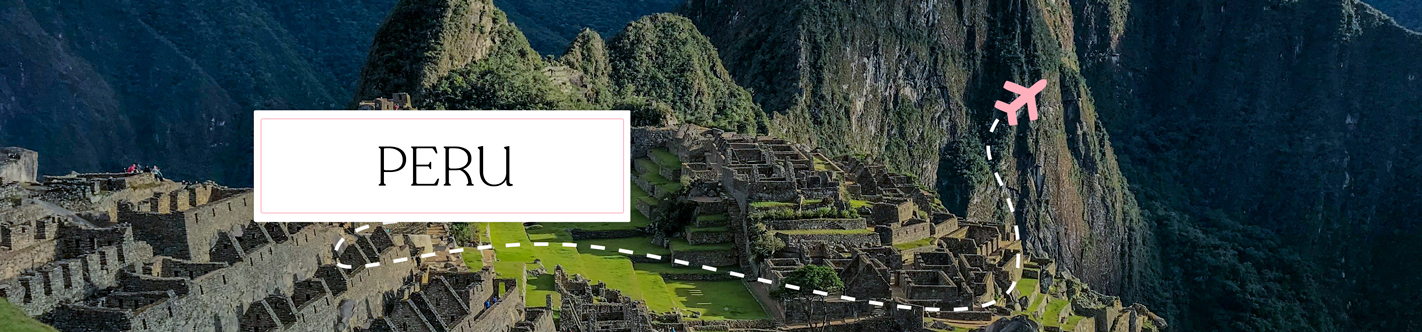
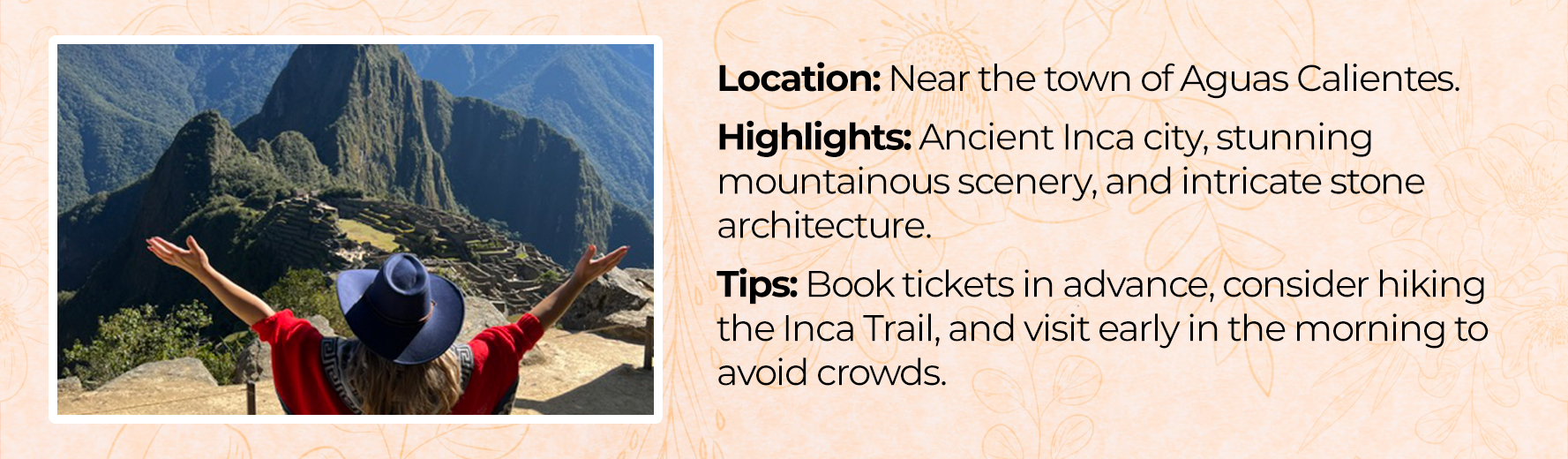
Peruvian culture is vibrant and diverse, known for its arts, cuisine, literature, and music. Famous for archaeological sites like Machu Picchu, it also boasts globally recognized dishes such as ceviche and lomo saltado.
Best Time to Visit:
The dry season from May to September is ideal for most regions, especially for trekking and outdoor activities.
Health and Safety:
Stay hydrated, acclimatize to high altitudes, and take precautions against mosquito-borne illnesses in the Amazon.
Currency:
The Peruvian Sol (PEN). Credit cards are widely accepted in cities, but carry cash for remote areas.
Language:
Spanish is the official language, though many locals speak Quechua and other Indigenous languages. Basic Spanish phrases can be very helpful.
Transport:
Domestic flights connect major cities. Buses are common for intercity travel. Trains, such as those to Machu Picchu, offer scenic journeys.
Cultural Etiquette:
Respect local customs and traditions. Ask permission before photographing people, particularly in Indigenous communities.
Peru's geography includes the coastal plain (Costa), Andean highlands (Sierra), and Amazon basin (Selva), each with unique ecosystems and climates. The Peruvian Amazon is extremely biodiverse. Peru has a rich cultural history, diverse landscapes, and a growing economy, but also faces modern challenges.
Major Attractions
Machu Picchu
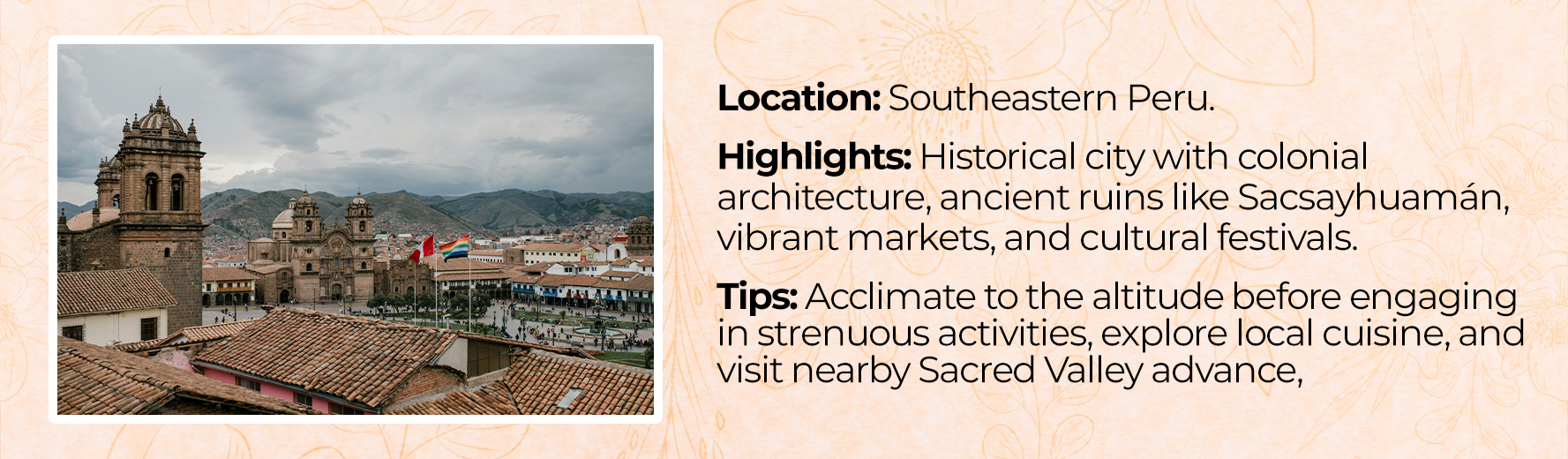
Cusco
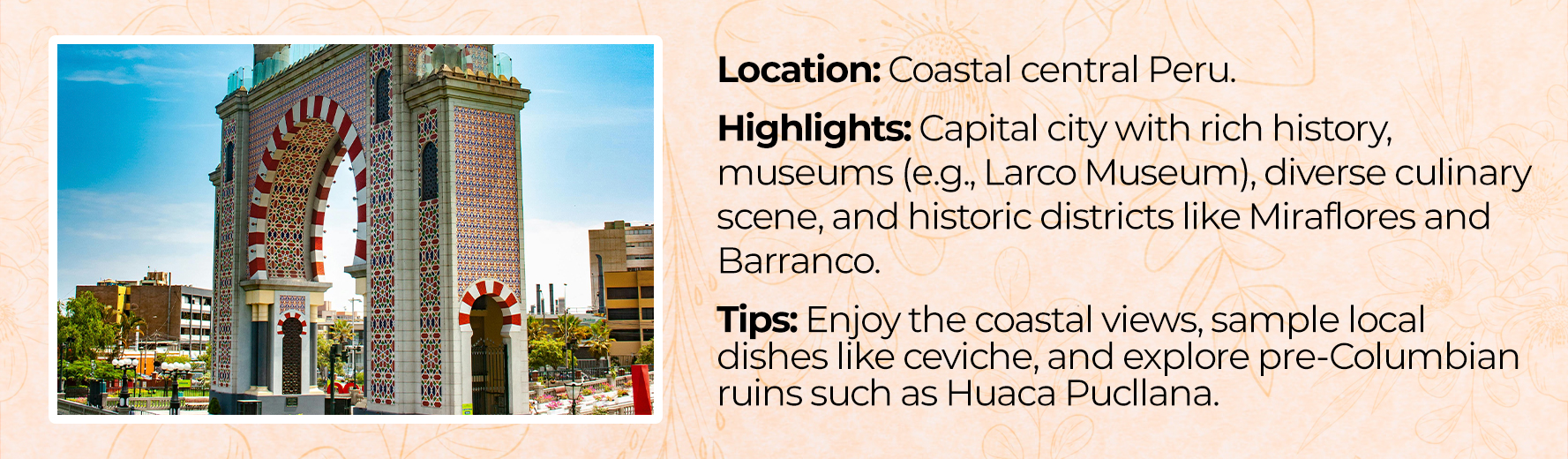
Lima
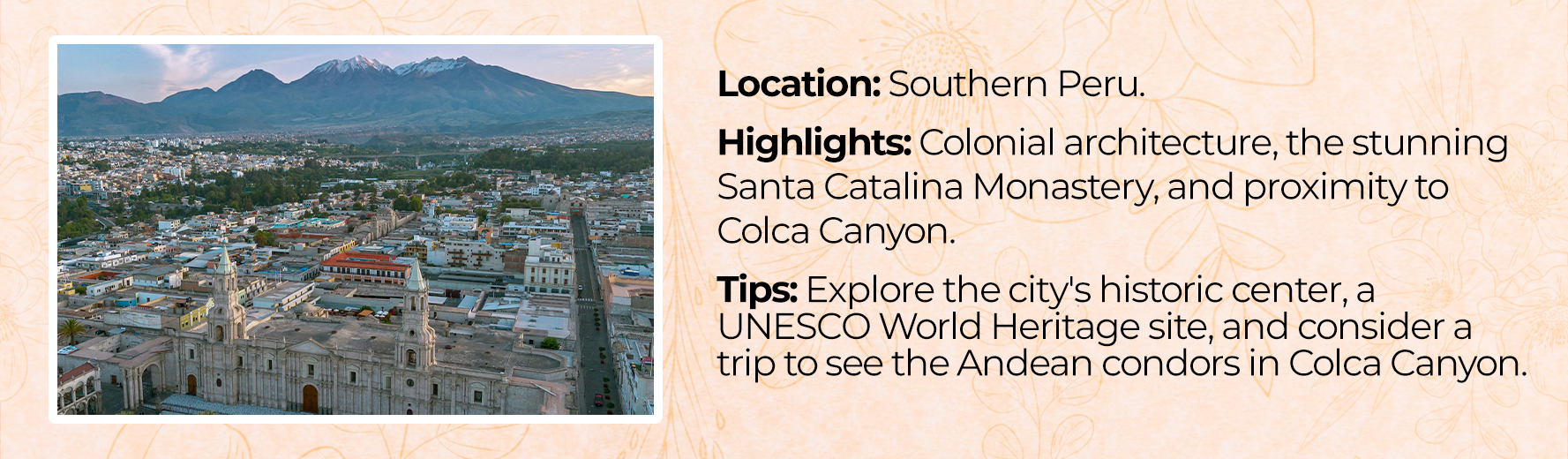
Arequipa
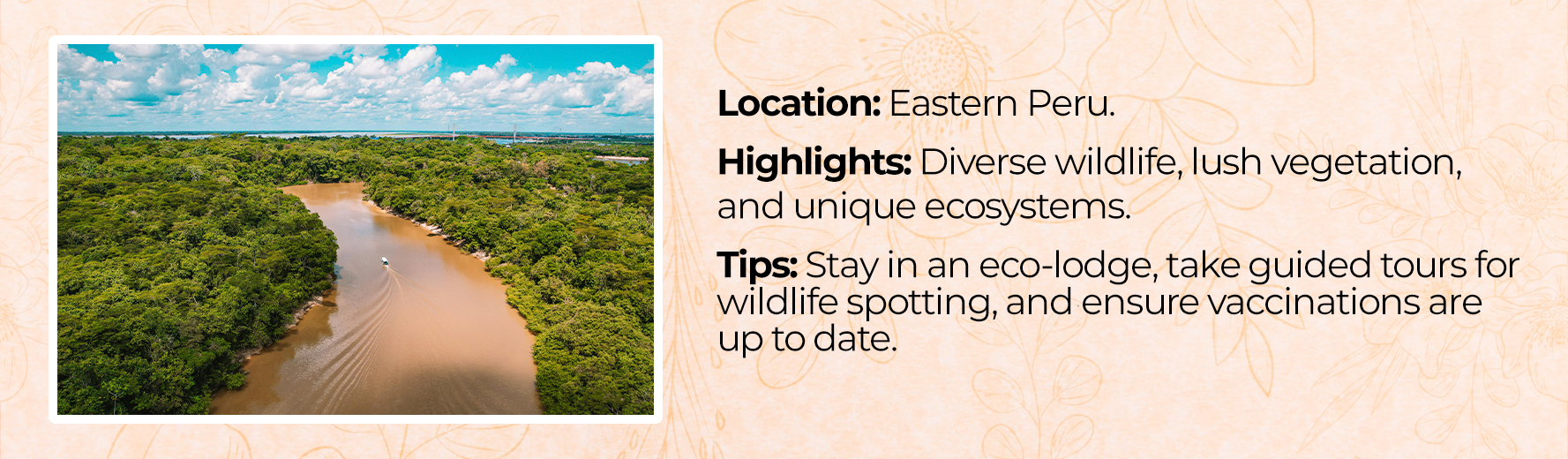
Amazon Rainforest
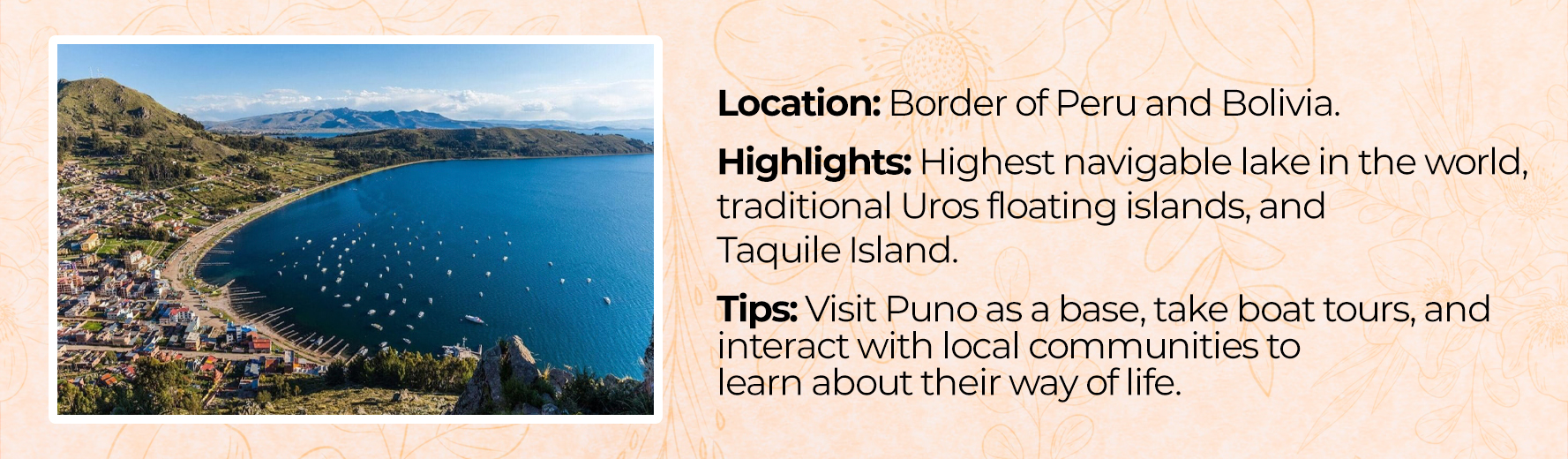
Lake Titicaca
Let´s Talk
Please select a date and let's plan your vacation together